

Biomedical researchers are increasingly encouraged to work in interdisciplinary teams, however, this comes with challenges. Unfamiliar terminology or differences in interdisciplinary working practices can often lead to misunderstandings which hinder these collaborations and develop into tensions. In addition, post-doctoral researchers often feel the additional pressure of establishing themselves as independent researchers in a competitive field, which can lead to feelings of isolation.
For computational researchers, this isolation can be felt particularly keenly if they are the only computational researcher in their group, which is commonly the case. In contrast to traditional mentoring, peer mentoring connects those at a similar career stage, which helps to provide an open and non-judgemental space. Moreover, peer mentoring can be an opportunity for researchers to build communities and networks with those who they might otherwise find it difficult to connect with. This can be of particular benefit for those at post-doctoral stage looking to identify future collaborators.
Aims:
- Foster interdisciplinary communication and knowledge exchange
- Provide a space to discuss common career challenges
- Build supportive interdisciplinary networks
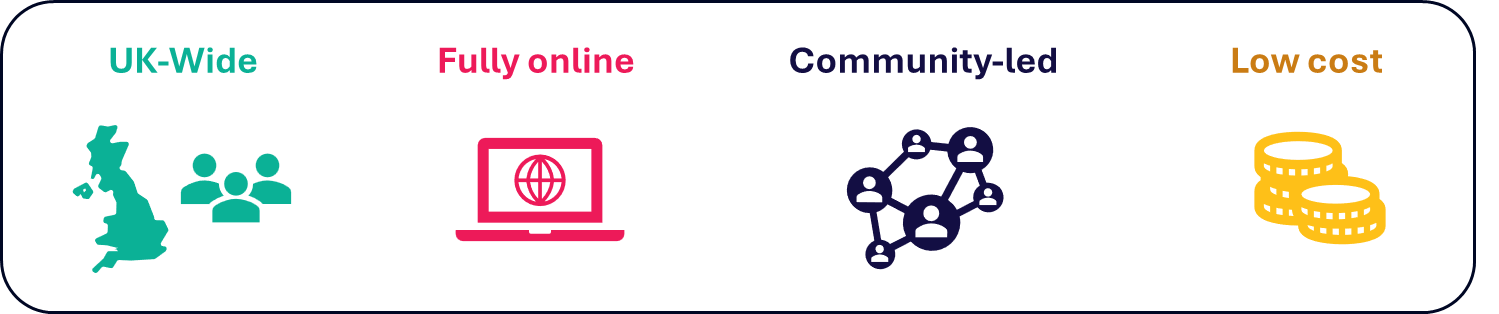
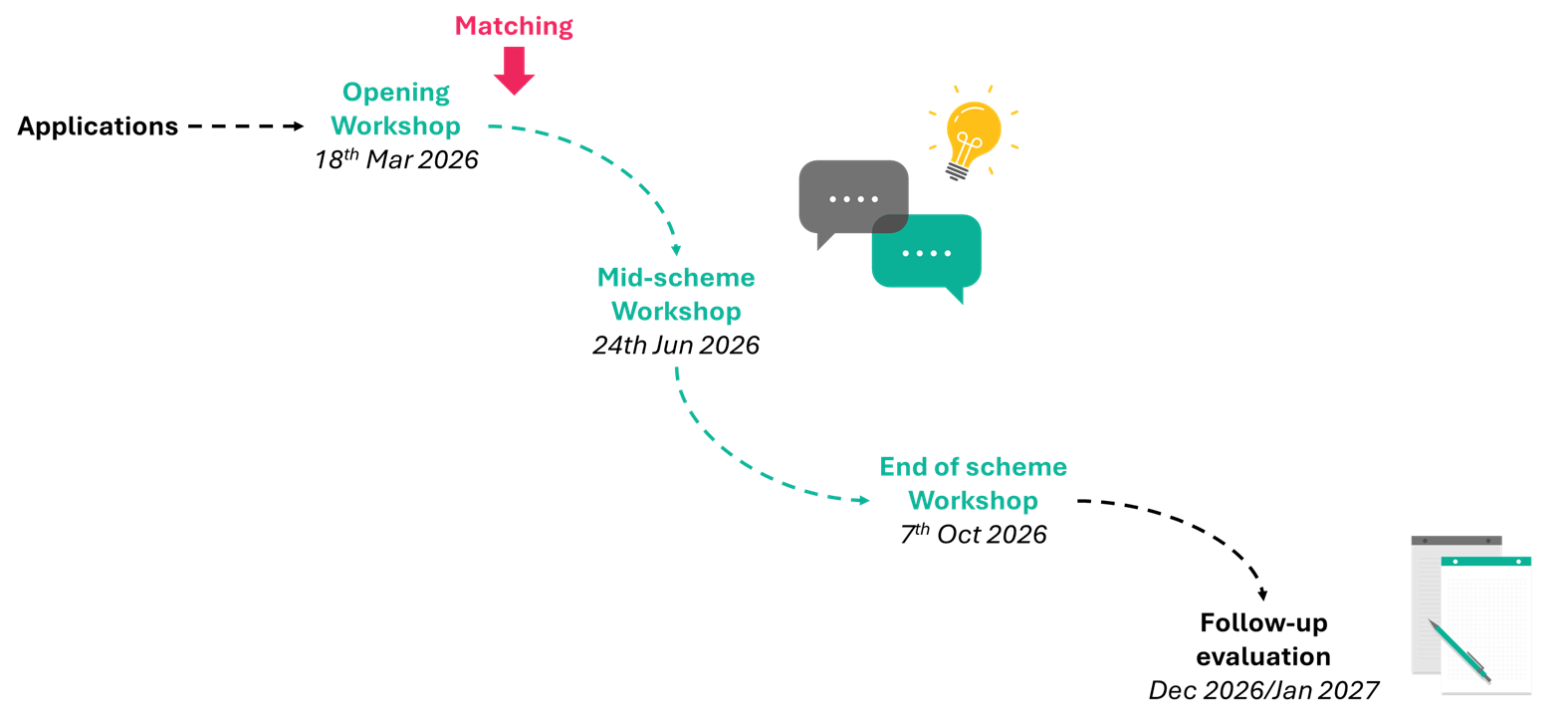
Scheme Outline
Who applied?
On 18th March 2026, we welcomed a cohort of 30 participants onto the Bytes and Bench programme, selected from 52 applications. In order to reach a national audience, we advertised to a broad range of networks including MRC Units and Institutes, networks associated with our project partner institutions (HDR-UK, CRUK and institutions involved in the Biomedical data Science Leadership Awards), and social media. As a result, we were able to recruit 30 applications for our pilot programme spanning 16 different institutions from a mix of both computational and laboratory-based domains. | 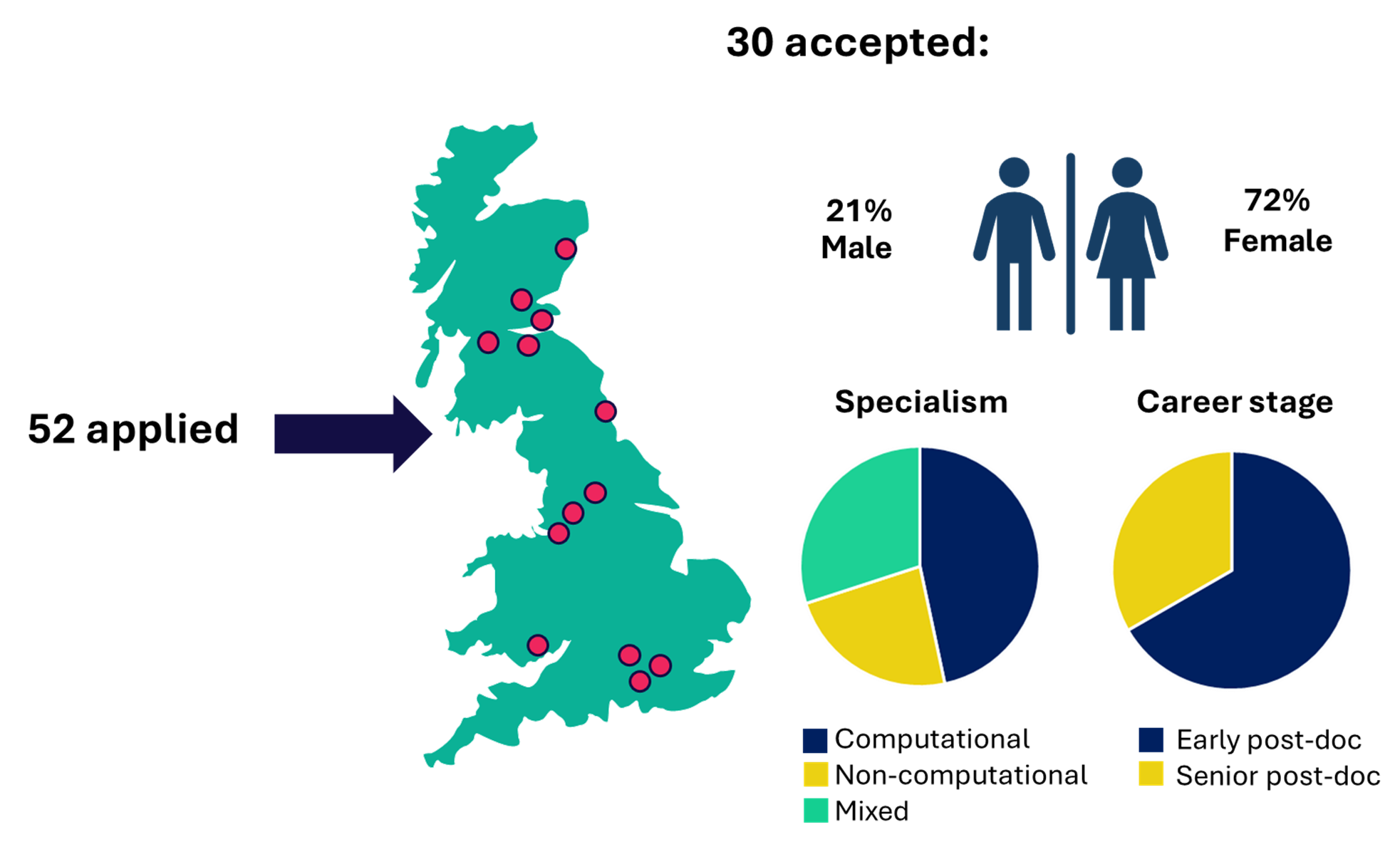 |
Scheme Materials